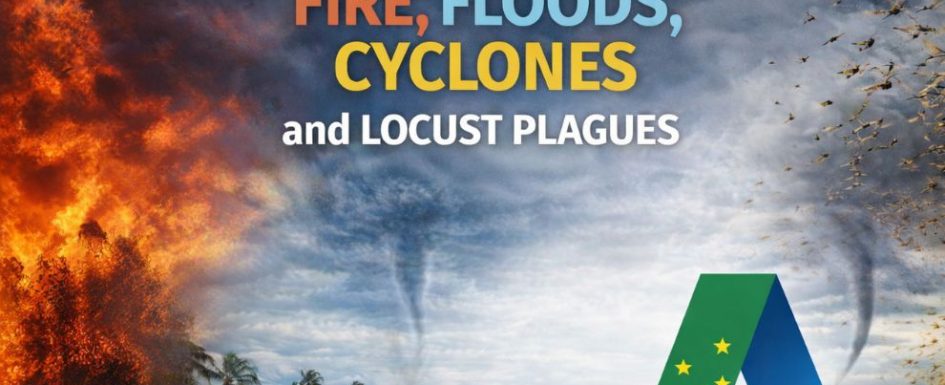
Be prepared for fire, floods, cyclones and locusts plagues
QUEENSLAND’S climate can be a magnificent thing but when it’s bad, it’s wicked.
Once it was a given that winters were mild in Queensland and summers hot and stormy.
But in recent years we’ve found that storm season can arrive at any time, and resident managers have to be
vigilant all year round, always at the ready to protect the properties they oversee.
Queensland is considered the most disaster-prone state in Australia, with more than 100 natural disasters
since 2011 – including floods, king tides, cyclones, and bushfires.
These events have had a devastating impact, with reconstruction and recovery costs exceeding $22 billion.
And this current cyclone season, tipped to finish on April 30, could be unusually severe due to warmer sea
surface temperatures in the northern parts of the country.
There were 12 cyclones in the last season, the highest number in 18 years. This included Cyclone Alfred, which
struck Queensland and New South Wales in March 2025, causing nearly $2 billion in damage.
In 2017 Cyclone Debbie handed Whitsundays tourism a $180 million damages bill.
Emergency services had to evacuate thousands of holidaymakers stranded on resort islands hit by wind gusts
stronger than 260 km/h. Many of our members properties were devasted with some losing power for almost a
month.
Hamilton Island and Airlie Beach were littered with snapped trees, roof tiles and furniture, with wrecked yachts
washed ashore.
But resident managers are invariably the cool heads in a climate crisis.
They have had to become really good at disaster management. No one knows the building or its occupants
better than a resident manager, and they are always on the spot to deal with a crisis immediately.
In the last few years, our ARAMA members have had to manage just about every kind of natural and economic
disaster. Their effectiveness is one of the reasons that Management and Letting Rights businesses continue to
rise in value no matter how much trouble envelops the tourism and accommodation industries.
While North Queensland has always had frequent cyclone activity, recently we’ve seen them hit Brisbane, the
Gold Coast, and areas much further south than their usual territory.
Our resident managers are at the pointy end of natural disasters. Many of them at high rise complexes during
floods have had to drag cars out of car parks, knock on doors – particularly for some of the elderly residents –
and help organise groceries and food drops.
They are often unsung heroes who can respond quickly and rally volunteers together.
Guy Elliott, ARAMA’s national president, manages a large property of about 100 two-storey townhouses in a
gated community on the canals at Mermaid Waters.
Most of the living quarters are upstairs but at least one of the residents was sleeping downstairs during a recent
flood and woke up with water flapping around his bed. It was like somebody put a hose in a bathtub and the
water just kept rising.
Before long Guy was organising a massive clean-up, and being on the spot he could help people as they
needed it, check on any emergency situations, and then organise the recovery straight away.
During the most destructive phase of Cyclone Debbie in 2017, Jo Matthews at the Toscana Village Resort at
Airlie Beach, showed once again the vital role of a resident manager.
Most people had evacuated and gone home before the cyclone arrived but there were still people ready to ride
it out – residents who lived there looking over the Whitsundays, and a couple of tourists who couldn’t get a
flight.
Jo knew exactly where they all were. She put the garden furniture in the swimming pool so it didn’t blow away,
and baked muffins, delivering them to people in their apartments on the afternoon the cyclone was coming.
She warned everyone what would happen when the cyclone hit, made sure they got everything in off the
balconies and reassured the residents and guests that, while they would lose power, they just had to hang in
there and sit tight no matter how hard the wind roared. She told them it would be traumatic for a few hours but
the storm would eventually pass. Jo gave them torches and matches and supplies to keep them comfortable.
Just as Jo had predicted, Cyclone Debbie roared into Airlie Beach, the power went out, and the noise of the
wind was deafening. It stopped about 9 o’clock. Most people thought it was over, but Jo warned them that it
was only the eye of the storm. The tail came back and was even more intense, slamming into the Toscana
Resort like a freight train.
Jo lost a lot of foliage and there was a lot of broken glass but largely thanks to her efforts as a well prepared
resident manager, there were no injuries to people staying there.
Being prepared for disasters could be the difference between staying safe or putting yourself and those you
love in danger. You only need to look at 2020 when we started out the year on fire and we ended the year with
flood warnings. That’s Australia!
It’s incumbent upon all of us wherever we are in Australia to prepare for storm season and that storm could be
in the form of a cyclone or seasonal rains or bushfire.
There is plenty of information from good government agencies who can help accommodation providers
prepare for the things that will inevitably happen in Australia.
People just need to take an hour to scroll through the government websites to have a look at their property,
make a plan, talk to their staff about it and be prepared.
Get Ready Queensland (getready.qld.gov.au) is one such government website helping people prepare for
natural disasters in all situations.
“An emergency and evacuation plan will ensure everyone knows exactly what to do if the worst happens,’’ the
website declares.
An hour spent studying the website and preparing the property and residents could save the lives of you and
your guests.
You’ll need to pack an emergency kit including first aid supplies, 10 litres of drinking water per person at a
minimum, non-perishable food for three days, important documents stored on a USB, sturdy work gloves for
removing rubbish and debris, enough tissues for each guest, enough wipes for each guest, battery-operated
radio, torches, spare batteries to last three days, toiletries for three days, sunscreen and insect repellent, can
openers, phone and portable charger, hand sanitiser and face masks for each guest.
Managers should also do a risk assessment on their property, an analysis of everything including making sure
they have appropriate insurances, especially business interruption insurance.
A cyclone can wipe out a whole bunch of units and without that business interruption insurance you could be
in strife.
Storm preparation includes checking that walls, roof and eaves are secure, treetops and branches are clear of
the property, loose material and furniture that could cause injury in high winds has been stored, and that fuel
tanks are full.
Before the storm hits make sure the roof gutters are clear and the drains cleaned out.
Prepare for bushfire season by clearing out gutters because embers and sparks can quickly set leaves alight.
Damage to an electric system is also a major fire hazard. Prevent electrical problems by inspecting the outside
of your property, specifically looking for damaged or frayed wires.
Check for any bird nests near electrical fixtures, as these nests should also be removed before they cause a
fire.
Each operator has an obligation to educate themselves when it comes to dealing with disasters. Because as
we know with natural disasters in Australia – and particularly Queensland – it’s not a matter of “if” but “when”.
The Resident Managers who have a plan, who have armed themselves with knowledge about what to do when
the cyclone, fire or floods arrive, are the managers who will be doing all they can for their community.
They will also be the managers who emerge from the disaster quickly, ready to get back to business.
Now what to do about that plague of locusts?
Author: ARAMA